

self-centred craving : ค้นหาหนังสือธรรมะ หน้า 3 / 33
หน้าหนังสือทั้งหมด
177
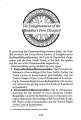
The Enlightenment of the Buddha’s First Disciple
The Enlightenment of the Buddha’s First Disciple
In preaching the Dhammackakapavattana Sutta, the Buddha revealed the Thirty-Seven Factors of Enlightenment [bodhipakkhiyadhamma], the Cycle of Depende
The Buddha, in the Dhammackakapavattana Sutta, introduced the Thirty-Seven Factors of Enlightenment, laying down the framework of the Four Noble Truths and the Cycle of Dependent Origination. Dhammaca
243
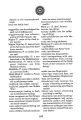
Buddhist Terminology and Concepts
Speech at the transcendental level) see sense consciousness) manussasampatti (see worldly wealth) Mara q.v. (P. devil, demon) maggañāṇa (see knowledge of the path out of defilements) maraṇa (see dying
This text delves into essential Buddhist terms and their meanings. It covers concepts such as Mara (the demon), Mettā (loving-kindness), and the significance of terms like 'maraṇa' (dying) and 'mutti'
236
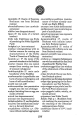
Glossary of Buddhist Terms
Akiṇiṭṭhā (P. Realm of Supreme anurakkhāṇa-paddhāṇa (maintre Brahmas: see form Brahmā
akusalahamma (see unwhole- anusayā (see subtle defilements)
someness) apilapanasati (see monitoring as- alābha (se
This glossary provides definitions and explanations of essential Buddhist terms, including various realms, states of mind, and notable figures. Key concepts such as Anāgamī (non-returner), anatta (not
26
Journey to Joy
Journey to Joy
26
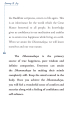
the Buddhist scriptures, return to life again. This
is an inheritance for the world which the Great
Master bestowed to all people. Its knowledge
gives us confidence in our meditation
In 'Journey to Joy,' the teachings of the Dhammakaya are unveiled as a source of true happiness and wisdom. The great Master gifts this knowledge to the world, guiding individuals towards self-awarene
15
Self-Training and Endurance in Family Life
Those who have full knowledge, ability and goodness
must follow only this path in order to train themselves to keep
up with the world and its people, and not surrender to
defilements.
Surely, if you f
This text emphasizes the significance of self-training and self-control in leading a fulfilling life. By acknowledging the need to change negative habits, individuals can foster a healthier family env
25
The Four Problems in Marriage
Part One: Family Life
These are: Truthfulness (Sacca), Self-Control (Dama),
Endurance (Khanti), and Sacrifice (Caga). When lacking in
any of these principles, conflict or discord will arise in any
hum
Part One: Family Life highlights four essential principles for maintaining healthy relationships: Truthfulness (Sacca), Self-Control (Dama), Endurance (Khanti), and Sacrifice (Caga). Conflict within f
184
Glossary of Key Concepts in Buddhist Philosophy
Part Seven: Appendixes
Glossary
Anattata: Non-self; nothing in the world has implicit
identity
"There is nothing out there, not even our bodies, which
we can control. Thus, it is not distinctly ours.
This glossary provides definitions for key Buddhist concepts such as Anattata (non-self), Aniccata (impermanence), and Bhavana (meditation). It emphasizes the understanding that nothing possesses a pe
142
Self-Responsibility and Social Development in Buddhism
Suzanne Jeffrey
And that’s where we close the circle. We do it for ourselves because we have to develop ourselves before we can develop anything else … but everything about us affects all of the peop
The text discusses the necessity of self-development before aiding others, emphasizing self-responsibility post-birth. It highlights the crisis of independence and the importance of moral boundaries i
78
The Teachings of the Buddha
The Teachings of the Buddha
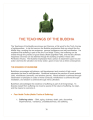
The Teachings of the Buddha are known as Dhamma, a Pali word for the Truth, the law of righteousness. In his first sermon the Buddha emphasized that one should live the Mi
The Teachings of the Buddha, known as Dhamma, emphasize the Middle Way, avoiding extremes of indulgence and self-mortification. Central to Buddha's teachings are the Four Noble Truths, which acknowled
40
The Futility of Self-Mortification
Commentorial Metaphors: Self-mortification:
1. Sugar-cane juice and poison: It can be compared to a mixture of sugar-cane juice and poison. In the end such practices will lead to death, and all for no
This text presents a series of metaphors illustrating the perils of self-mortification. Comparing self-harm to poison, stale excrement, and dangerous leaps, it highlights the futility of such practice
141
Understanding Impermanence, Suffering, and Not-Self
Impermanence [aniccān]: This is the built-in character of objects that are of a nature to change the whole of the time. Such things as the Five Aggregates of the Human Body are changing the whole of t
This text delves into the fundamental Buddhist concepts of impermanence (aniccān), suffering (dukkham), and not-self (anattā) as expressed through the Five Aggregates of the Human Body. It highlights
24
The Path of Self-Mortification in Buddhism
2. The Path of Self-Mortification
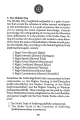
According to the Buddha, the practice of self-mortification [attakilamathānuyoga] is fruitless. He said that it is not a practice in keeping with the tenets of Buddhi
In Buddhism, the practice of self-mortification is deemed fruitless by the Buddha. He elucidates that these practices, such as lying on thorns and severe fasting, do not genuinely rid individuals of d
25
The Middle Way: A Path to Liberation
3. The Middle Way
The Middle Way [majjhima paṭipadā] is a path of practice that avoids the extremes of either sensual indulgence or self-mortification. It is a path of practice that is conducive to ta
The Middle Way [majjhima paṭipadā] serves as a balanced path in Buddhism, steering clear of both sensual pleasures and self-mortification. This approach is aimed at tempering the mind, achieving supre
118
Understanding the Mind and Success in Buddhist Practice
and the four different functions of the mind are scattered in their separate directions like a group of people unable to work as a team — they cannot pool their abilities efficiently.
By 'all succes
This text discusses the four functions of the mind and their impact on achieving success in Buddhist practice, as emphasized by Luang Phaw Wat Paknam. He speaks on the importance of reaching a state o
77
Addressing Family Issues for Child Development
Part Three: Problems Within the Family
towards their happiness, spoiling our children neglects their
important emotional and spiritual growth. Spoiled children
usually end up more unhappy in the long-
Part three discusses the critical issues faced within families when children are spoiled, leading to unhappiness and self-destructive behaviors. It emphasizes the role of parents as teachers in guidin
46
Journey to Joy
Journey to Joy
46
46
universal love, the love of all of humankind
without expectation of reward or gain.
To love ourselves in the appropriate way,
we have to still the mind by relaxing and gently
clos
In this chapter, the focus is on cultivating universal love and self-love without expectations. By relaxing the mind through meditation, individuals can achieve inner peace and a sense of cleansing th
24
Dhamma for Laypersons and the Four Levels of Beauty
A person who has the Dhamma for Laypersons
(Gharāvās-dhamma) must display four regular habits:
1. Habit of Responsibility – Whatever the task at hand, he must do it to the best of his ability, in t
A person who follows the Dhamma for Laypersons exhibits four habits: responsibility, self-training, endurance, and sacrifice. These traits ensure self-reliance and leadership within families. In marri
53
Self-Development and Teacher Training Initiatives
Meeting #8
January 03, 2010
Today I am here with Luang Pi Joshua and Luang Pi Anurak. I have just returned to Bangkok and the Wat, after spending the end of 2009 in New York, helping my daughter move
In this meeting, various educational initiatives are discussed, focusing on self-development programs and teacher training. Projects include a Self-Development program inspired by the Five Rooms and S
120
Seeking Guidance from a Dharma Adviser
Needing with a Dharma Adviser
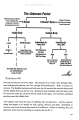
The Unknown Factor
-------------------------------
It Must Exist Because of Balance:
If There Is Suffering, Fear,
And Ignorance, There Must
Be Something That Can Fix It
The text delves into the concept of seeking a Dharma adviser to help navigate the unknown factors of suffering, fear, and ignorance. It discusses that if there is suffering, there must be a solution,
38
Chapter 4: Cultivating Good Emotions through Meditation
The extracted text from the image is:
-----------
Chapter 4
Those who meditate with consistency will have good emotions, and can easily see and understand the truth that everyone has good and bad in
Chapter 4 emphasizes the significance of regular meditation in helping individuals recognize the duality of good and bad within themselves and others. By understanding this balance, people can cultiva